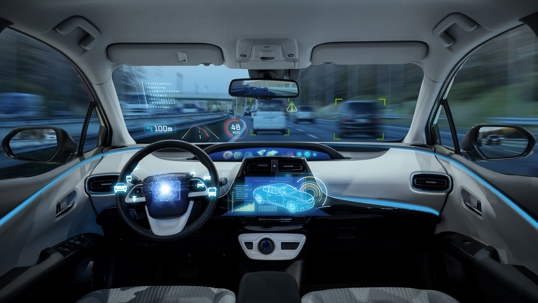
Self-driving cars are no longer theoretical in Colorado. As autonomous vehicles expand testing and deployment, crashes involving automated driving systems raise complex questions about fault, evidence, insurance coverage, and product liability.
If you were injured in a self-driving car accident in Colorado, understanding how these cases work is critical. These claims are often more technical and involve more parties than a typical car accident case.
What Are Self-Driving Cars?
A self-driving car uses an automated driving system (ADS) to perform some or all aspects of the driving task. Under Colorado law, an ADS is hardware and software collectively capable, without human intervention or supervision, of performing the dynamic driving task on a sustained basis. See Colo. Rev. Stat. § 42-4-201(7.7).
Not all vehicles marketed as “self-driving” are fully autonomous. Many systems still require a human driver to monitor the road and take over when necessary. Fully automated systems may operate without human input only if they comply with applicable law.
Are Self-Driving Cars Legal in Colorado?
Yes, but with important limitations.
Colorado law allows a person to use an automated driving system to operate a vehicle or perform a driving function if the system is capable of complying with all applicable state and federal laws. See Colo. Rev. Stat. § 42-4-242(1).
The statute also clarifies that laws written for human drivers generally do not apply to an automated driving system, except those governing the physical operation of a vehicle. See § 42-4-242(2).
If the system cannot comply with all applicable laws, it generally cannot be tested on public roads without approval from the Colorado State Patrol and the Colorado Department of Transportation. See § 42-4-242(3).
Who Is Liable in a Colorado Self-Driving Car Accident?
Liability in a self-driving car accident depends on what caused the crash. Unlike a typical accident, multiple parties may be responsible:
A human driver, if they failed to monitor the system or intervene when required
A vehicle owner or fleet operator, if maintenance or operational decisions contributed to the crash
A manufacturer, if the vehicle or automated system was defectively designed or manufactured
A software or technology provider, if failures in sensors, mapping, or code caused the incident
Another driver or third party, if the crash resulted from ordinary negligence
Colorado follows a modified comparative fault rule. An injured person’s damages are reduced by their percentage of fault, and recovery is barred if their fault is equal to or greater than the combined fault of the defendants. See Colo. Rev. Stat. § 13-21-111.
What Causes Self-Driving Car Accidents?
Even advanced systems are not error-proof. Common causes include:
Sensor or perception failures (camera, lidar, radar issues)
Software bugs or delayed system responses
Outdated or incorrect mapping data
Human misuse or overreliance on automation
Unexpected actions by other drivers or pedestrians
Poor weather or road conditions
Determining the cause usually requires technical investigation and access to vehicle data.
What Evidence Is Important in These Cases?
Self-driving car accident cases depend heavily on digital and technical evidence, including:
Event data recorder (EDR) information
Sensor and camera data logs
GPS and mapping data
Software updates and system history
Maintenance and calibration records
Remote operator or fleet monitoring logs
Police reports and witness statements
This evidence may be controlled by companies and can be lost quickly. Early legal action is often necessary to preserve it.
How Long Do You Have to File a Lawsuit in Colorado?
Deadlines vary depending on the claim:
Motor vehicle accident claims: generally 3 years under Colo. Rev. Stat. § 13-80-101(1)(n)
Product liability claims: generally 2 years under Colo. Rev. Stat. § 13-80-106
Claims against public entities: notice is typically required within 182 days under Colo. Rev. Stat. § 24-10-109
Accrual rules and the nature of the claim can affect these deadlines, especially in cases involving both negligence and product liability.
What Compensation Can You Recover?
If you were injured in a Colorado self-driving car accident, you may be able to recover compensation for:
Medical bills and future treatment
Lost wages and reduced earning capacity
Property damage
Pain and suffering
Physical impairment or disfigurement
Loss of enjoyment of life
The value of your claim depends on your injuries, available evidence, and how fault is allocated.
What Should You Do After a Self-Driving Car Accident?
If you are involved in a crash:
Seek medical attention immediately and call 911
Document the scene, including vehicle damage and road conditions
Identify whether there was a human driver, passenger, or remote operator
Obtain the police report and officer information
Avoid relying solely on statements from the company involved
Contact an attorney quickly to preserve critical evidence
Why You Need a Colorado Self-Driving Car Accident Lawyer
Self-driving car accident cases are complex. They often involve:
Multiple corporate defendants
Product liability claims
Advanced technical evidence
Comparative fault disputes
A lawyer can investigate the crash, preserve key data, identify responsible parties, and pursue compensation on your behalf.
Injured in a Self-Driving Car Accident in Colorado? Contact a Lawyer
If you were injured in a self-driving car accident in Colorado, acting quickly can make a significant difference in your case.
Contact Matthew C. Clawson at Clawson & Clawson LLP to discuss your situation.
Call (719) 719-634-1848 to schedule a consultation.
Early action helps preserve evidence, protect your rights, and position your case for the strongest possible outcome.