Who Is Responsible in a Colorado Semi-Truck Accident?
By: Matthew C. Clawson, JD, MBA | Colorado Truck Accident Attorney
Who Is Responsible in a Colorado Semi-Truck Accident?
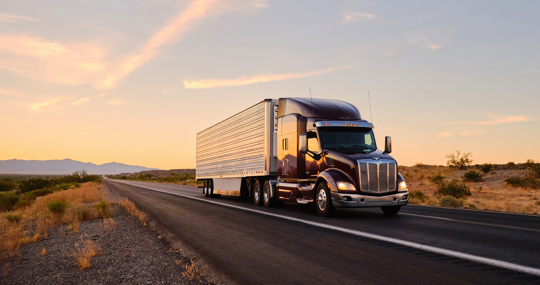
Semi-truck accidents often cause catastrophic injuries, and determining who is legally responsible is far more complicated than in a normal car crash. Colorado trucking cases involve federal regulations, corporate defendants, multiple insurance carriers, and sometimes several at-fault parties. Because semi-trucks weigh up to thirty times more than a passenger vehicle, even a low-speed collision can cause devastating harm.
If you were injured in a semi-truck crash in Colorado Springs, Pueblo, Denver, Castle Rock, Lone Tree, or anywhere along the Front Range, understanding who can be held liable is essential to recovering fair compensation.
This guide explains each party that may be responsible, how fault is proven, and what steps victims should take immediately after a commercial truck collision.
Potentially Responsible Parties in a Colorado Truck Accident
1. The Truck Driver
A truck driver may be responsible if they:
- Were speeding
- Followed too closely
- Drove while distracted
- Drove while fatigued
- Violated hours-of-service rules
- Failed to check blind spots
- Drove under the influence
- Failed to secure cargo
Driver negligence is common, but liability rarely stops with the driver alone.
2. The Trucking Company
Under Colorado and federal law, a trucking company can be responsible for:
- Unsafe hiring or training
- Forcing drivers to meet illegal delivery schedules
- Failing to monitor hours-of-service logs
- Falsifying maintenance and inspection records
- Poor safety practices
- Negligent supervision
- Negligent entrustment
Trucking companies often hide or destroy evidence without quick legal action. A lawyer must send a preservation letter immediately.
3. The Trailer Owner or Leasing Company
Many trucks haul trailers owned by separate companies. If the trailer was unsafe or poorly maintained, the trailer owner may share fault.
4. The Cargo Loading Company
Cargo that is overloaded or improperly balanced can cause:
- Jackknife crashes
- Rollovers
- Lane departures
- Brake failure
Loading companies often try to avoid responsibility, but weigh station data and bills of lading help prove fault.
5. Maintenance and Repair Contractors
Fault may fall on mechanics or fleet maintenance vendors if they failed to:
- Replace worn brakes
- Fix steering issues
- Repair bald tires
- Document inspections correctly
- Identify mechanical defects
Poor maintenance is a major cause of tire blowouts and brake failures.
6. Truck or Parts Manufacturers
Manufacturers can be responsible for:
- Defective brakes
- Faulty tires
- Steering system defects
- Engine defects
- Electronic control module failures
These claims fall under Colorado product liability law.
7. Government Entities
If the crash involved unsafe road design, missing signage, or poor road maintenance, the responsible government agency may share liability. These cases require strict notice deadlines under the Colorado Governmental Immunity Act.
How Fault Is Proven in Colorado Trucking Cases
A successful truck accident case requires technical and legal proof. Your attorney may gather:
- Electronic logging device (ELD) data
- Black box data
- GPS and telematics records
- Driver qualification files
- Dispatch communications
- Safety policies
- Maintenance records
- Weigh station data
- Surveillance footage
- Accident reconstruction reports
Trucking companies move fast to protect themselves. You need someone who moves faster.
Colorado Truck Accident FAQ
1. Can multiple parties be responsible in a Colorado trucking case?
Yes. Most semi-truck accidents involve more than one at-fault party.
2. Is the trucking company automatically liable for the driver?
Often yes. Employers are responsible for workers acting within the scope of employment.
3. What if the driver was an “independent contractor”?
This rarely protects trucking companies. Courts look at control, not labels.
4. Do I need a police report?
Yes. It is essential evidence.
5. Should I talk to the trucking company’s insurance adjuster?
No. They are trained to limit your claim.
6. Can the trucking company destroy evidence?
They sometimes try. Your lawyer must send a preservation letter immediately.
7. What compensation can I recover?
Medical bills, lost wages, pain and suffering, future treatment, impairment, and more.
8. Does Colorado allow punitive damages?
Yes, if the conduct was fraudulent, malicious, or willful and wanton.
9. What if the semi-truck was speeding?
Speed data from the black box can prove negligence.
10. What if the driver fell asleep?
This often indicates hours-of-service violations.
11. How long do I have to file a claim?
Three years for injury claims; two years if a government entity is involved.
12. What if I was partially at fault?
Colorado uses comparative negligence. You can still recover if you were less than 50 percent at fault.
13. Can I sue the manufacturer for a defective part?
Yes. These claims require expert analysis.
14. Is an attorney necessary for truck cases?
Yes. These cases are too complex to handle alone.
15. Will the insurance company try to settle quickly?
Yes, often before the full injury extent is known. Do not accept early offers.
Colorado Regions We Serve
Clawson and Clawson LLP proudly serves accident victims throughout Colorado Springs, Pueblo, the Denver Metro area, Castle Rock, Lone Tree, Falcon, Monument, Fountain, Woodland Park, Douglas County, El Paso County, Jefferson County, Arapahoe County, Adams County, Boulder County, and all surrounding Colorado communities.
To discover who is responsible for your Colorado truck accident, contact us at:
- Colorado Springs: (719) 634 1848
- Denver Metro: (303) 805 9853
- Email: Matthew@clawsonlaw.net
Legal Disclaimer- This article is informational only and does not create an attorney-client relationship. Legal representation begins only after a written engagement agreement is signed. No legal outcome is guaranteed.